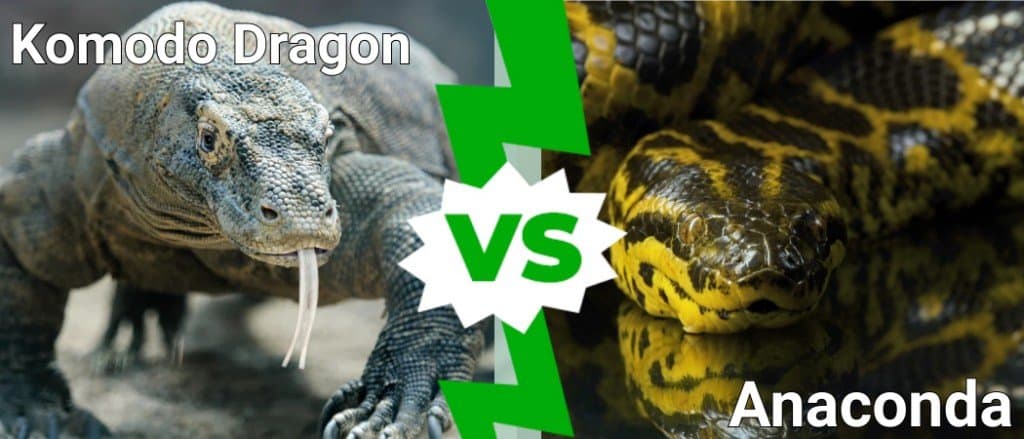
In the heart of an imagined tropical wilderness, two of the most formidable reptiles on Earth come face-to-face in a showdown of strength, strategy, and primal instinct: the Komodo dragon and the green anaconda. While these creatures inhabit vastly different continents—Komodo dragons are native to the Indonesian islands, while green anacondas roam the swamps of South America—this hypothetical encounter explores what might happen if their worlds collided.
The Combatants
The Komodo dragon (Varanus komodoensis) is the largest living lizard, growing up to 10 feet in length and weighing over 150 pounds. It possesses a powerful, muscular body supported by thick limbs and equipped with razor-sharp claws. The Komodo’s most fearsome weapon is its serrated teeth combined with venomous saliva, which can prevent blood clotting and induce shock in prey. It is a cunning ambush predator, known for stalking prey quietly before delivering a lethal bite and tracking it until it succumbs.
The green anaconda (Eunectes murinus), on the other hand, is the heaviest snake in the world and among the longest, capable of reaching 30 feet and weighing over 500 pounds. Despite its bulk, the anaconda is a master of stealth in water, where it waits patiently to ambush animals that come too close. It doesn’t bite to kill but instead coils around its victim, using its immense strength to suffocate it in a death grip.
The Battleground
Our imagined arena is a marshy riverbank surrounded by dense jungle—a perfect hybrid of the Komodo’s dry island habitat and the anaconda’s swampy home. Here, both predators are out of their element, yet capable of adapting. The Komodo, more agile on land, is cautious in the muddy terrain. The anaconda, out of water, is slower and less maneuverable, but still deadly with its crushing coils.
The Encounter
The fight begins with both creatures sizing each other up. The Komodo dragon, being a land predator, approaches with caution, tongue flicking in and out to sense chemical cues. The anaconda remains still, waiting like a coiled spring. When the Komodo steps closer, the anaconda strikes, aiming to latch onto a limb and begin its constriction.
The Komodo leaps back, narrowly avoiding the initial strike. It retaliates with a vicious bite to the anaconda’s thick body, its teeth tearing through scales. The anaconda writhes and counters with its muscular coils, managing to snare one of the dragon’s hind legs. As the constriction tightens, the Komodo snarls and thrashes, slashing with its claws and sinking its venom-laced teeth into the snake’s body.
This becomes a brutal war of attrition—crushing power versus toxic bite. The Komodo’s venom begins to take effect, weakening the anaconda’s grip as blood loss increases. The snake, sensing danger, attempts to retreat toward water, dragging the Komodo with it. But the dragon, tenacious and relentless, holds on, delivering more wounds.
Eventually, the anaconda’s strength wanes. It releases its coils and tries to slither away, but the damage is too severe. The Komodo dragon, bloodied but victorious, watches as its rival collapses in the mud. Though severely injured, the dragon survives, thanks to its resilience and deadly precision.
Conclusion
In this fictional encounter, the Komodo dragon’s agility, weaponized bite, and persistence edge out the anaconda’s overwhelming strength. But it’s a close match—had the anaconda gotten a better hold earlier, the outcome could have shifted dramatically.
This imagined clash highlights the fascinating adaptations of both species. The Komodo dragon is a land-based apex predator with a deadly combination of venom and strategy. The anaconda is a master of aquatic ambush, capable of overpowering creatures far larger than itself. In their natural environments, each reigns supreme. But in this crossover battle, only one walks away.
Post a Comment