 |
| Result is here |
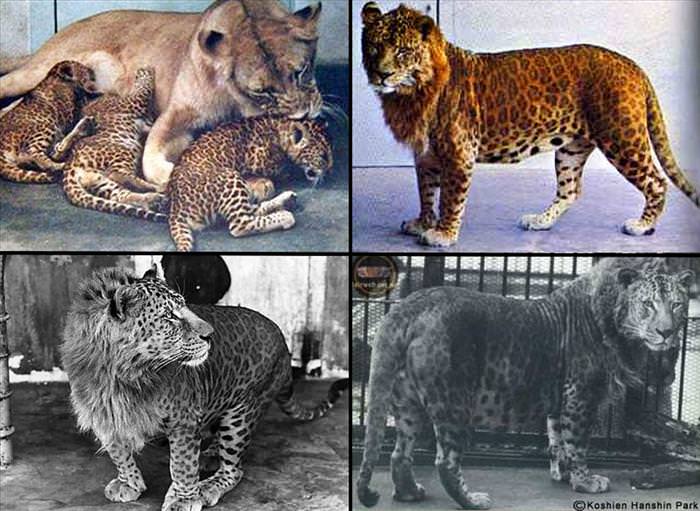
A cross between a jaguar and a lioness is a rare and intriguing example of a hybrid big cat, typically called a "jaglion" (male jaguar x female lion). These animals are not naturally found in the wild due to the differences in their natural ranges and behavior, but they have occasionally been bred in captivity, usually unintentionally.
The Jaglion: A Hybrid of Power and Grace
The jaglion is a remarkable and visually striking animal, a hybrid created by crossing a male jaguar with a female lion (lioness). This fusion of two powerful big cat species results in an animal that embodies the physical strength and stealth of its jaguar sire and the social intelligence and regal bearing of its lioness dam.
Physical Appearance
In appearance, the jaglion is a blend of both parents, though specific traits may vary depending on the genetic dominance of each species. Typically, the jaglion inherits the compact, muscular build of the jaguar, which is one of the most robust and powerful cats in the animal kingdom relative to its size. From the lioness, the hybrid may gain some of the longer limbs and slightly less stocky body shape, creating a physique that is both agile and strong.
The coat of a jaglion is one of its most fascinating features. It often displays a muted blend of both parents' markings. The base color is usually a tawny gold or sandy brown, inherited from the lioness, overlaid with faint or moderate black rosettes and spots characteristic of a jaguar. Some jaglions have darker shading along the spine or around the face, a reflection of the jaguar’s more vividly marked coat. The patterning is usually less pronounced than in a pure jaguar, giving the hybrid a shadowy, ghost-like appearance.
Facially, the jaglion has a broad, square jaw and a powerful muzzle, resembling the jaguar’s fearsome bite structure, which is among the strongest of all big cats. However, the eyes may be more lion-like—almond-shaped, expressive, and golden or amber in hue. The ears are typically rounded, and the tail is long and expressive, often ending in a tuft, a nod to the lion heritage.
Behavior and Temperament
Behaviorally, the jaglion is a unique amalgam of instincts and habits. Jaguars are solitary, territorial, and secretive creatures that prefer dense forests and proximity to water. In contrast, lionesses are social animals that live in prides and hunt cooperatively on the open savannah. As a result, the jaglion may show a preference for solitude and independence but also display unexpected sociability, especially if raised among other animals or in a human-controlled environment.
Jaglions are highly intelligent and curious, often demonstrating problem-solving skills that reflect the cerebral nature of both parent species. They may also be more active at night (nocturnal), a trait aligned with the jaguar’s behavior, and enjoy swimming or playing in water—unusual for most big cats but typical of jaguars.
Vocalizations of the jaglion can also be diverse. While they may not roar as loudly or frequently as a pure lion, jaglions have a variety of sounds at their disposal—growls, chuffs, and other hybrid noises that reflect their mixed heritage.
Habitat and Care
Because jaglions are not naturally occurring in the wild, they are found only in captivity, usually in wildlife sanctuaries or conservation centers. Their care is complex, requiring large enclosures with both open and shaded areas, opportunities for climbing and swimming, and mental stimulation through enrichment activities. Their diet must also be carefully managed, as both parent species are apex predators with high protein requirements.
Ethical concerns are paramount in any discussion of hybrid animals. Most conservationists argue against deliberate hybridization, as it has no conservation value and may result in animals with compromised health or unclear ecological niches. However, in the rare cases where jaglions exist, often due to unplanned matings, they are usually cared for responsibly and treated as educational ambassadors for their species.
Post a Comment